

Automotive Mounting Bracket
An automotive mounting bracket is a highly engineered structural component designed to secure and support various parts within a vehicle assembly. It plays an essential role in ensuring stability, alignment, and long-term durability under demanding driving conditions. Although it may appear to be a simple metal part, a mounting bracket must withstand vibration, shock, temperature changes, moisture, and continuous mechanical stress throughout the life of the vehicle.In automotive applications, mounting brackets are used to fix components such as sensors, lights, exhaust parts, batteries, engine accessories, air conditioning units, control modules, and body panels. Their primary function is to hold these parts firmly in place while maintaining correct positioning relative to surrounding systems. A well-designed bracket helps reduce movement, prevents wear, and supports the safe operation of the component it carries.The material selection for an automotive mounting bracket is critical. Common materials include steel, stainless steel, aluminum, and in some cases reinforced composite materials. Steel brackets are valued for their strength and affordability, while stainless steel offers better corrosion resistance. Aluminum brackets are lighter in weight, which helps improve fuel efficiency and reduce overall vehicle mass. The choice of material depends on the specific application, load requirements, environmental exposure, and cost targets.Manufacturing methods vary according to design and performance needs. Brackets can be produced through stamping, bending, welding, laser cutting, casting, or CNC machining. Surface treatments such as powder coating, galvanizing, anodizing, or electroplating are often applied to improve corrosion resistance and extend service life. Precise fabrication is important because even small deviations can affect fitment, performance, or assembly efficiency.Designing a mounting bracket involves balancing strength, weight, cost, and ease of installation. Engineers must consider load distribution, vibration damping, thermal expansion, and accessibility during maintenance. Holes, slots, ribs, and folds are often incorporated into the design to enhance rigidity without adding unnecessary weight. In modern vehicles, brackets must also support compact packaging and modular assembly processes.Automotive mounting brackets are widely used in passenger cars, trucks, electric vehicles, and commercial machinery. As vehicles become more advanced, brackets must adapt to new layouts and lighter structures while continuing to provide reliable support. In electric vehicles, for example, brackets may be required for battery systems, power electronics, and charging-related components, where safety and precision are especially important.Overall, an automotive mounting bracket is a small but vital part of vehicle engineering. It contributes to structural stability, component protection, and assembly accuracy. Its performance directly affects reliability, durability, and the quality of the final vehicle system.
Products
Category:
-
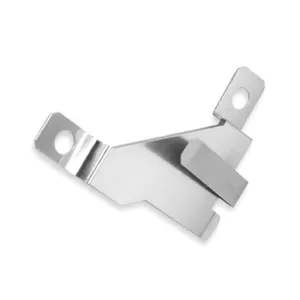
Precision Stamped Metal Bracket for EV Components
Category: EV Metal PartsBrowse number: 24Number:Release time: 2026-08-21 16:57:43Custom automotive sheet metal mounting bracket designed for EV systems, vehicle electrical assemblies, battery support structures, and industrial equipment applications. Manufactured with precision stamping and forming processes, this lightweight metal component provides stable positioning, reliable installation, and durable performance for automotive and mechanical systems.
News
Category:
No search results found!
Case
Category:
No search results found!
Video
Category:
No search results found!
Download
Category:
No search results found!
Job
Category:
No search results found!
Featured Products
No search results found!



 Phone
Phone