

CNC bent aluminium metal components
Certainly — here is a 500-word English description of CNC bent aluminium metal components, without any company names:---CNC bent aluminium metal components are precision-engineered parts widely used in modern manufacturing, machinery, electronics, transportation, and architectural applications. These components are produced by combining computer numerical control (CNC) machining with advanced bending techniques, allowing manufacturers to achieve high dimensional accuracy, consistent quality, and complex shapes that meet demanding engineering requirements.Aluminium is a preferred material for many industries because of its excellent strength-to-weight ratio, corrosion resistance, thermal conductivity, and ease of processing. When aluminium is formed into bent components, it provides structural support while remaining lightweight, which is especially important in applications where reducing overall weight is essential. Examples include automotive brackets, aerospace assemblies, electronic housings, machine enclosures, industrial frames, and decorative structural parts.The CNC process plays a critical role in the fabrication of these components. CNC machines are controlled by precise digital programming, ensuring that each cut, bend, hole, or contour is produced according to exact specifications. This level of automation reduces human error, improves repeatability, and allows for efficient mass production as well as customized small-batch manufacturing. The bending process itself may involve press brakes, roll forming, or other specialized equipment, depending on the design and thickness of the aluminium sheet or profile.One of the main advantages of CNC bent aluminium components is their versatility. They can be manufactured in a wide range of shapes, angles, and sizes to suit different technical and aesthetic needs. Whether the requirement is for a simple L-shaped bracket or a more complex multi-angle assembly, CNC technology makes it possible to produce accurate results with minimal variation. This flexibility also supports rapid prototyping, helping engineers test and refine product designs before full-scale production.In addition to accuracy and flexibility, these components offer excellent surface finishing possibilities. After bending and machining, aluminium parts can undergo anodizing, powder coating, polishing, brushing, or painting to enhance their appearance and durability. Surface treatment not only improves aesthetics but also adds protection against wear, oxidation, and environmental exposure. This makes CNC bent aluminium parts suitable for both indoor and outdoor use.Another important benefit is mechanical performance. Although aluminium is lighter than many other metals, it remains strong enough for numerous load-bearing applications when properly designed and fabricated. The bending process can be optimized to maintain material integrity and minimize deformation, ensuring the final product performs reliably under operational stresses. Modern CNC systems also help preserve consistency in every production run, which is essential for assembly compatibility and long-term product quality.Overall, CNC bent aluminium metal components represent an efficient and reliable solution for industries that require precision, durability, and lightweight construction. Their combination of advanced manufacturing technology and the natural advantages of aluminium makes them a valuable choice for a broad range of engineering and industrial applications.---If you want, I can also make this description more technical, more marketing-friendly, or rewrite it for a product catalog / website page.
Products
Category:
-
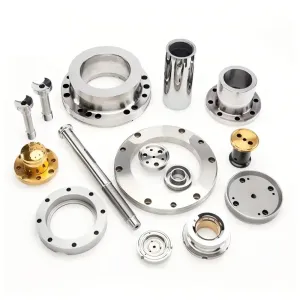
Custom Aluminum 6061 CNC Machined Automotive Parts
Category: EV Metal PartsBrowse number: 25Number:Release time: 2026-08-13 16:15:29This custom CNC machined sample is designed for automotive and EV-related assemblies that require stable dimensions, clean surface finishing, and reliable part consistency. Made from Aluminum 6061 and finished with anodizing, it is suitable for prototypes, small-batch trials, and drawing-based OEM production. The part can be manufactured by CNC milling and CNC turning according to customer drawings, samples, or technical requirements.
News
Category:
No search results found!
Case
Category:
No search results found!
Video
Category:
No search results found!
Download
Category:
No search results found!
Job
Category:
No search results found!
Featured Products
No search results found!



 Phone
Phone